Me When I Read the 3rd Paragraph Again
3rd Grade Reading Strategy and Curriculum Standards
An essential part of the 3rd grade reading strategy is development of writing skill along with reading skill. Students use language arts worksheets created to aid them write clear and coherent sentences and paragraphs that develop fundamental ideas. These third grade linguistic communication arts lessons encourage children to consider the audience they write for and to understand the purpose of their writing. The reading teacher guides students through researching, choosing a focus, prewriting, drafting, revising, and editing several versions. Various types of reference materials volition be function of this linguistic communication arts activity, including dictionaries, thesauruses, atlases, and encyclopedias.
Part of the tertiary class reading strategy is for children to understand and be able to apply complete and right declarative, interrogative, imperative, and exclamatory sentences in writing and speaking.
Interested in 3rd grade reading? Parents might as well observe the 3rd grade curriculum overview and 3rd grade linguistic communication arts lesson plans helpful.
3rd Grade Reading Strategy and Curriculum Standards: Grammer and Punctuation
Good grammar is important for 3rd class students likewise. This twelvemonth they will employ language arts worksheets to larn to place subjects and verbs that are in agreement and identify and use pronouns, adjectives, compound words, and manufactures correctly in writing and speaking. Some other 3rd form linguistic communication arts activeness is to identify and apply past, present, and future verb tenses properly in writing and speaking. 3rd grade students are trained to utilize subjects and verbs correctly in speaking and writing simple sentences.
Punctuation learned this year includes the use of commas in dates, locations, and addresses, and for items in a series. Children are too expected to punctuate dates, metropolis and state, and titles of books correctly when completing their language arts lessons. The third form reading strategy emphasizes the demand to capitalize geographical names, holidays, historical periods, and special events correctly. At this reading skill level children are taught to spell one-syllable words that have blends, contractions, compounds, orthographic patterns (e.g., qu, consonant doubling, changing the ending of a word from -y to -ies when forming the plural), and common homophones (e.g., pilus-hare), and to arrange words in alphabetic order.
tertiary Class Reading Strategy and Curriculum Standards: Writing Applications
The 3rd course reading strategy teaches students to create single paragraphs past developing topic sentences, including simple supporting facts and details. Students must write legibly in cursive or joined italic, assuasive margins and correct spacing between letters in words, and words in a judgement. Good penmanship is an important role of whatever language arts activity.
Language arts lessons for 3rd class students include development of reading skill past writing compositions that describe and explain familiar objects, events, and experiences. The third grade reading strategy guides them, using, for example, language arts worksheets, to write narratives, providing a context within which an activity takes place. Children are expected to include well-chosen details to develop the plot and to provide insights into why selected incidents are memorable. Elements of this language arts activeness include writing descriptions that use physical sensory details to present and support unified impressions of people, places, things, or experiences. Students are expected to use standard English conventions advisable for 3rd form when working on these language arts lessons.
Another language arts activity that develops reading skill is the writing of personal and formal letters, thank-yous notes, and invitations. These should bear witness an awareness of the cognition and interests of the audience and plant a purpose and context, and should include the date, proper salutation, trunk, closing, and signature.
tertiary Course Linguistic communication Arts Lessons, Language Arts Worksheets, Language Arts Activeness
The 3rd Grade reading strategy includes development of listening and speaking skills. This language arts activeness adds to a child's reading skill as they acquire to listen critically and respond appropriately to speech. Linguistic communication arts lessons help them speak in an easily understood manner. This year students demonstrate reading comprehension past retelling, paraphrasing, and explaining what has been said past a speaker. Students are expected to listen critically and respond appropriately to oral communication. They should speak using proper phrasing, pitch, and modulation so that a listener volition understand of import ideas. During comprehension testing, 3rd grade language arts worksheets may exist used to assistance children clarify the purpose of listening. For example they may be asked to connect and relate prior experiences, insights, and ideas to those of a speaker. Students are expected to respond to questions with appropriate elaboration. The 3rd grade reading strategy includes identification of musical elements in literary language, for example, rhymes, repeated sounds, and instances of onomatopoeia.
3rd grade students deliver brief recitations and oral presentations about familiar experiences or interests that are organized effectually a coherent thesis argument. Language arts lessons teach students speakers to organize ideas chronologically or effectually major points of data. They are expected to provide a beginning, a middle, and an end, including concrete details that develop a central thought, and to use clear and specific vocabulary to communicate ideas and constitute the tone. One language arts activity is to clarify and enhance oral presentations through the apply of appropriate props such as objects, pictures, or charts. These narrative presentations require that a tertiary grade kid provide a context for an incident that is the subject of the presentation, provide insight into why the selected incident is memorable, and include well-chosen details to develop character, setting, and plot.
Another part of the 3rd grade reading strategy is for children to read prose and poetry aloud with fluency, rhythm, and pace. Using advisable intonation and vocal patterns, they should emphasize important passages of a text being read. However another tertiary course reading strategy linguistic communication arts activity is to have students compare ideas and points of view expressed in broadcast and print media. They will demand to distinguish between the speaker'south opinions and verifiable facts. In doing this, 3rd grade language arts worksheets may help students organize their thoughts. Children enrolled in a tertiary grade reading strategy programme volition be asked to plan and present dramatic interpretations of experiences, stories, poems, or plays, using clear diction, pitch, tempo, and tone. They will make descriptive presentations that employ concrete sensory details to set forth and support unified impressions of people, places, things, or experiences. All these components of the 3rd course reading strategy help children develop greater reading skill.
More than: 3rd Grade Spelling Words.
Is your child beingness homeschooled?
*Reading Standards are defined past each state. Time4Learning bases its use of 3rd Course reading standards on the national bodies that recommend curriculum and standards and the interpretations of it past a sampling of states notably Florida, Texas, and California.
Lesson Activity Finder Tool
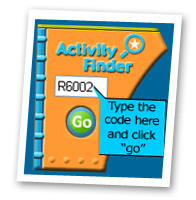 The lesson activity finder is one of the many helpful tools that Time4Learning offers its members. The activity finder is a shortcut that makes it easy for parents to preview lessons or find actress practice for their child.
Every lesson in the curriculum has a unique activity number, referred to in the lesson plans as an "LA Number." These numbers can be found on either the scope and sequence pages or the lesson plans in the Parent Dashboard.
The activity finder can be found in the lower left hand corner of the Educatee Dashboard. To apply information technology, members merely log in to their kid's business relationship, blazon the Learning Activeness (LA) number of a lesson into the Activity Finder and click "Go" to open it.
For additional data, please visit our hints and help section, which gives more than details virtually the activity finder.
Source: https://www.time4learning.com/homeschool-curriculum/elementary-school/third-grade/reading-curriculum-strategies.html
0 Response to "Me When I Read the 3rd Paragraph Again"
Post a Comment